22 May 2026
Weaving Digital Probabilities: Craps Virtual Rolls Meet Bingo Patterns and Poker Rhythms
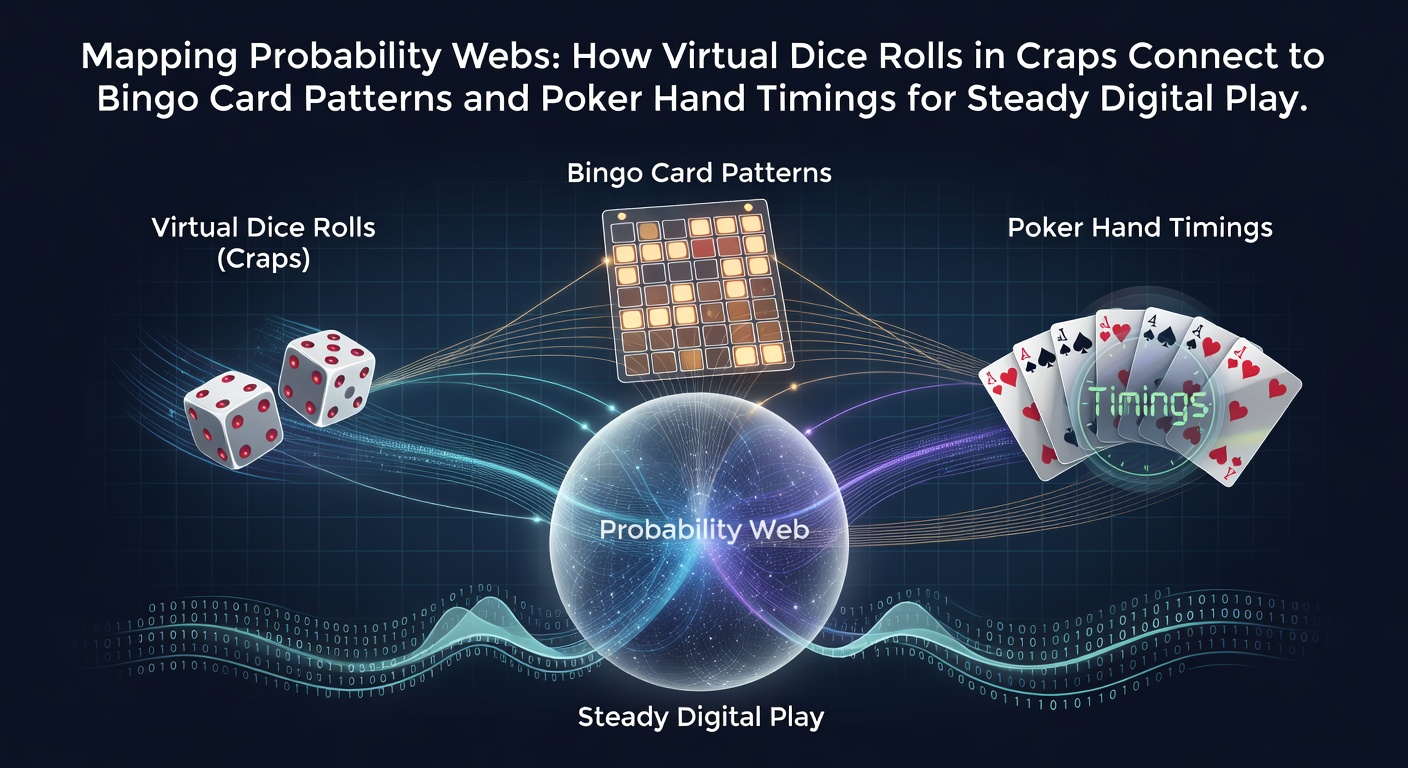
Virtual dice rolls in craps generate sequences that analysts track through established probability models, and these same frameworks extend naturally into bingo card patterns where number distributions follow comparable random generation rules. Observers note how each element operates within independent yet interconnected systems that digital platforms maintain through certified random number generators. Researchers have mapped these connections to illustrate how outcomes in one game can inform timing considerations in others without direct causation or shared mechanics.
Virtual Dice Mechanics in Craps and Their Probability Foundations
Digital craps platforms simulate dice outcomes using algorithms tested against millions of rolls to match physical probabilities, with the pass line bet carrying a house edge of 1.41 percent according to standard gaming mathematics. Virtual systems record roll distributions that align closely with the 36 possible combinations on two six-sided dice, and data from regulatory testing shows deviations remain within expected statistical variance. In May 2026 several testing laboratories updated their certification protocols to include expanded sequence analysis for online craps modules, ensuring longer roll histories reflect true randomness rather than short-term clustering.
Players often examine recent roll histories to adjust bet sizes, yet each roll resets independently because the underlying generator does not retain memory of prior results. Studies from the University of Nevada, Las Vegas Center for Gaming Research have documented how these reset properties maintain consistent long-term return percentages across thousands of sessions.
Bingo Card Patterns and Distribution Analysis
Bingo draws operate on similar random selection principles where each number appears with equal likelihood across the card grid. Patterns such as lines, corners, or full houses emerge at rates determined by the total pool size and draw frequency, and software logs reveal that completed patterns follow predictable frequency curves when tracked over large sample sizes. Analysts compare these curves to craps roll sequences because both rely on uniform probability spaces that resist short-term prediction.
Card layouts introduce positional variables that create visual clusters, but the underlying draw order remains statistically independent from one game to the next. Reports compiled by the Australian Gambling Research Centre indicate that players who review historical draw data across multiple sessions observe stable pattern completion rates rather than progressive streaks.
Poker Hand Timings and Decision Pacing
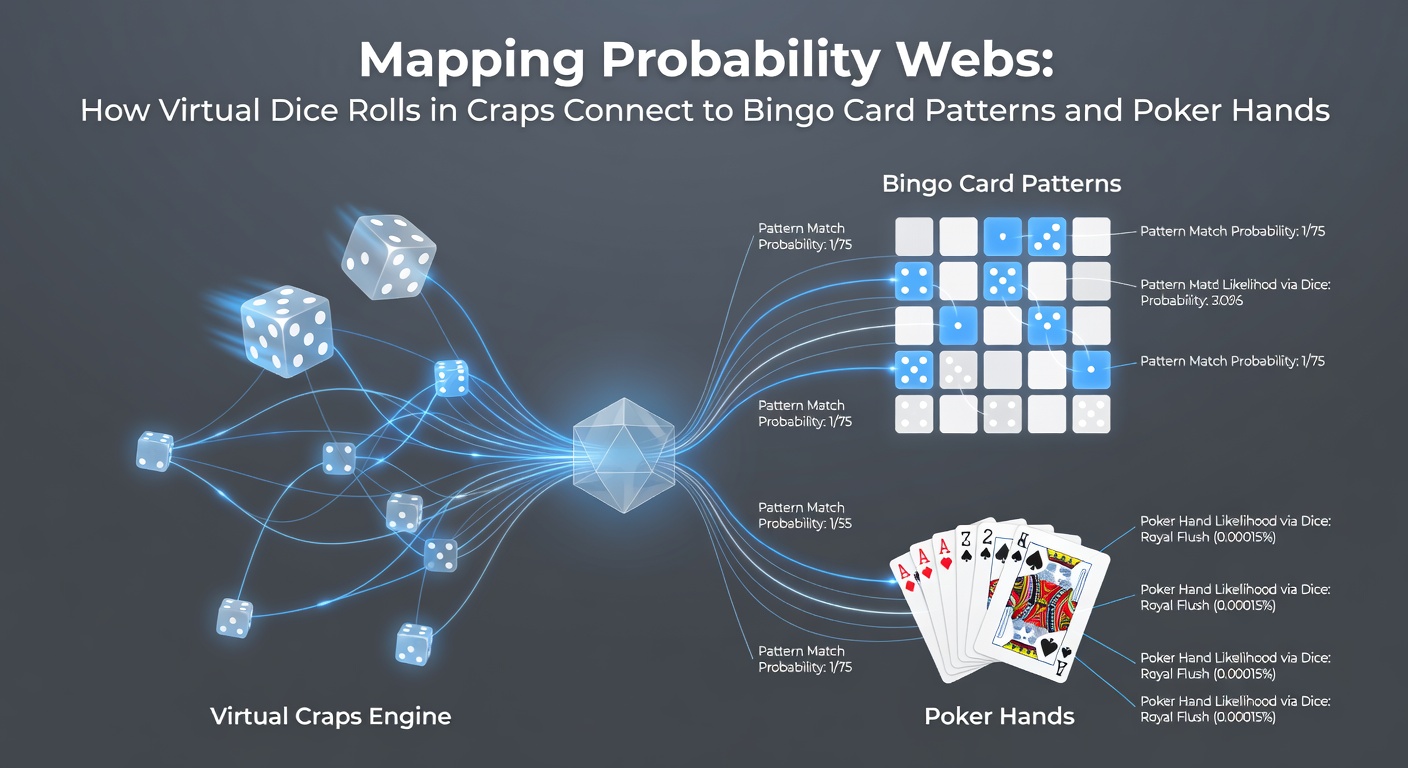
Online poker incorporates timing elements that differ from pure chance games because player decisions influence hand progression. Action intervals between bets, calls, and folds create measurable rhythms within each round, and platform data logs show average decision times cluster around 12 to 18 seconds for standard cash games. These intervals interact with card distribution probabilities since faster decisions often occur with stronger holdings while marginal hands prompt longer consideration.
Timing patterns therefore serve as indirect indicators within the probability environment, although they never alter the random shuffle itself. Research published through the Canadian Centre for Gaming Research demonstrates that consistent pacing across multiple hands correlates with steadier bankroll management when participants maintain fixed decision windows rather than variable speeds.
Interconnections Across Games for Balanced Digital Sessions
Analysts describe probability webs as the overlapping statistical behaviors that appear when players move between craps rolls, bingo draws, and poker sequences within the same session. Each game maintains separate random generators, yet session-level data collection reveals how variance in one area can prompt adjustments in another to preserve overall play duration. For example, a run of low-probability craps outcomes may lead participants to shift toward bingo rounds with more frequent small payouts, thereby extending total playtime before reaching preset loss limits.
Platform operators implement session timers and return-to-player displays that reflect these cross-game considerations. Figures released by the European Gaming and Betting Association show average session lengths stabilize when users alternate between high-variance and medium-variance titles rather than remaining in a single category. The connections therefore function as observational tools rather than predictive mechanisms.
Practical Applications in Steady Digital Play
Steady play emerges when participants apply timing awareness and pattern recognition across game types without assuming causal links. Digital interfaces now include optional dashboards that display recent roll counts alongside bingo completion rates and hand speed metrics, allowing users to monitor personal pacing. Such features rely on aggregated anonymized data sets that confirm uniform distribution across certified systems.
Training modules developed by independent testing firms emphasize that understanding these statistical relationships supports informed session planning. Participants who review combined metrics across craps, bingo, and poker report more consistent adherence to predetermined time and spend boundaries, according to aggregated operator reports.
Conclusion
Mapping these probability webs provides a framework for examining how virtual dice rolls, bingo patterns, and poker timings coexist within digital environments. The connections rest on shared principles of randomness and measurable variance rather than direct influence between games. Continued certification updates and research publications ensure these relationships remain transparent to both operators and players as platforms evolve.