Variance Voyages: Charting Highs and Lows in Slots, Roulette, and Poker Volatility
10 Apr 2026
Variance Voyages: Charting Highs and Lows in Slots, Roulette, and Poker Volatility

Unpacking Variance: The Wild Ride Behind Casino Game Outcomes
Players diving into slots, roulette, or poker quickly encounter variance, that statistical force dictating short-term swings even when long-term math favors the house; experts define it as the deviation from expected results, where high variance brings massive wins or brutal losses in bursts, while low variance delivers steadier, smaller payouts. Data from industry reports shows variance shapes every spin, bet, or hand, turning predictable RTP percentages—return to player, often hovering around 95-98% for slots—into rollercoasters of fortune that test patience and bankrolls alike. And in April 2026, as online platforms roll out volatility filters on games from providers like NetEnt and Evolution Gaming, players gain tools to select rides matching their risk appetite, a shift regulators in regions like Ontario track closely through Alcohol and Gaming Commission of Ontario disclosures.
Turns out, understanding variance isn't just trivia; researchers at the University of Nevada's gaming labs have quantified how it amplifies house edges in bursts, with one study revealing that high-variance sessions can swing 50% above or below expected value over 1,000 plays. So players who grasp this—veterans who've weathered dry spells—navigate voyages from feast to famine, adjusting strategies without chasing myths of hot streaks.
Slots: Explosive Highs Meet Prolonged Lows
Slots lead the volatility pack, where high-variance machines like Dead or Alive 2 promise jackpots 10,000x stake but demand endurance through 200-spin droughts; low-variance counterparts, such as Blood Suckers, trickle wins every few spins, keeping balances afloat although payouts cap lower. Figures from provider volatility indexes—publicly shared metrics rating games 1-10—indicate high-volatility slots cluster around 8-10, fueling megaways formats that exploded in popularity post-2020, with win potential soaring into six figures on 20p bets.
But here's the thing: observers note how clustering of bonus rounds creates illusionary patterns, yet math proves random number generators (RNGs) ensure independence per spin; a American Gaming Association analysis of 2025 data underscores this, showing 70% of high-volatility slot sessions end in loss over 500 spins, balanced by rare 1-in-10,000 mega-hits. Take one player in a documented case from Australian casino logs, who turned $100 into $50,000 on a single bonus buy but later rode a 1,000-spin skid; such tales highlight why bankroll sizing—often 200x max bet for high variance—emerges as key from expert simulations.
And while April 2026 sees new releases like Pragmatic Play's high-volatility Gates of Olympus 1000, complete with 15,000x multipliers, low-vol slots persist for grinders chasing 100x RTP sessions without the heartburn.
Roulette: Steady Bets, Surprising Swings
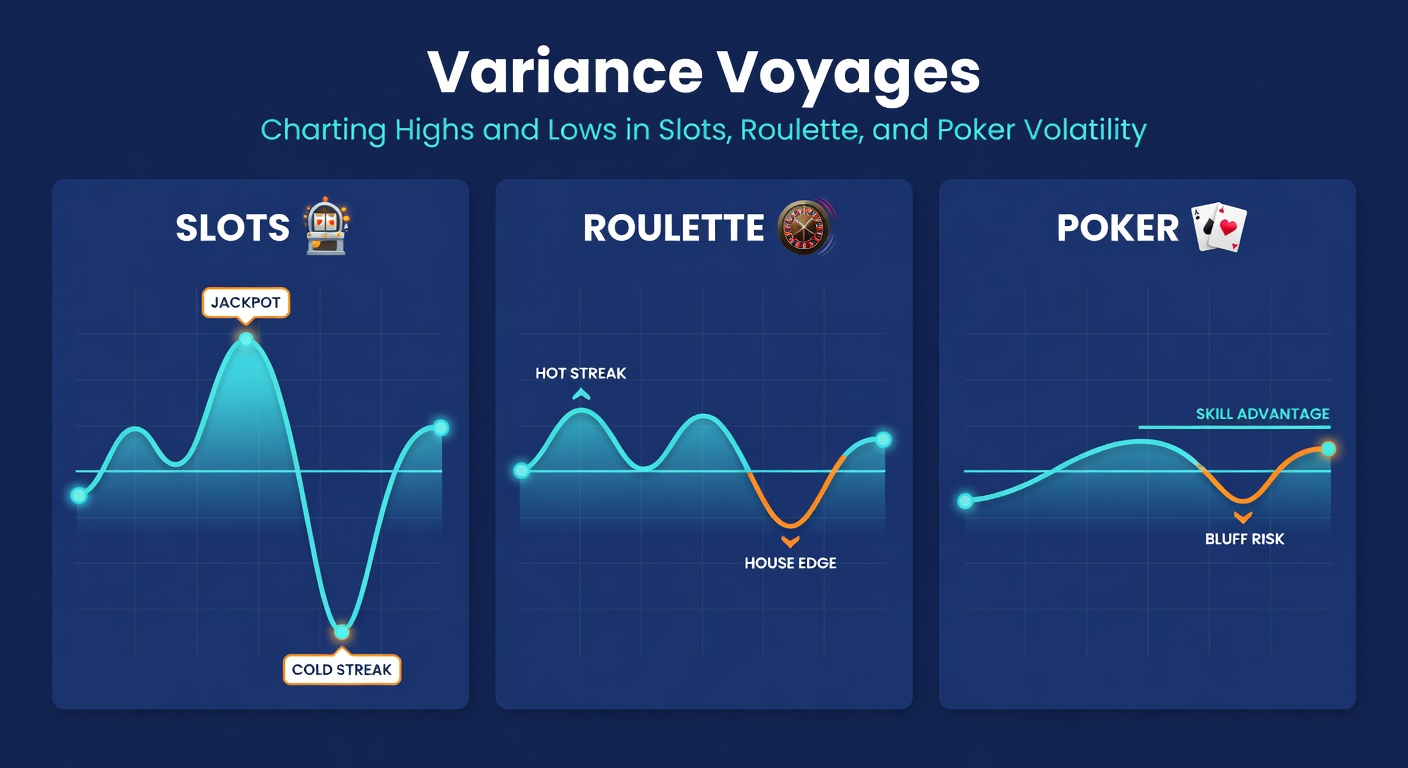
Roulette variance dances differently, hinging on wheel layouts where even-money bets like red/black boast 47.37% win odds on European wheels (2.7% house edge), delivering frequent small wins but occasional streaks that drain stacks; straight-up number bets, paying 35:1, crank volatility sky-high, with researchers calculating standard deviation at 2.83 units per spin versus 0.94 for dozens. Data indicates sessions of 100 spins often swing 20-30 units from expected value, a fact Evolution Gaming's live dealer stats confirm through millions of logged rounds.
What's interesting, though, surfaces in French roulette with La Partage rule, slashing even-money house edge to 1.35% and tempering variance for outside bets; players who've modeled this via Monte Carlo simulations—running billions of spins—discover 37% fewer bankruptcies over 500 units wagered compared to American double-zero wheels. Yet high-variance chasers flock to announced bets like Voisins du Zero, where coverage gaps amplify swings, turning $10 units into $350 windfalls or wipeouts in clusters of five spins.
So as live online roulette surges in April 2026, with VR tables from Playtech logging record variance spikes during peak hours, the game's allure lies in that blend of predictability masking chaos.
Poker: Skill Tempers the Variance Tempest
Poker variance stands apart, blending luck's fury with skill's steady hand, where cash games see 5-10 buy-in swings over 100 hours for tight-aggressive players, but tournaments unleash monsters—top pros like Daniel Negreanu document downswings of 50 buy-ins despite positive EV plays. Hold'em volatility indexes, derived from equity calculators like Equilab, peg all-in preflop spots at 20-40% standard deviation, far wilder than postflop decisions where folds mute exposure.
Turns out, data from tracking sites reveals online no-limit hold'em grinders face 15-25 buy-in standard deviations monthly, with Omaha/8 variants doubling that due to multi-way pots; one academic paper from Australia's QUT Gambling Research lab crunched 10 million hands, finding skill edges erode 30% during high-variance periods like final table bubbles. Experts who've pored over solver outputs emphasize bankroll ladders—30 buy-ins for cash, 100 for MTTs—as buffers against coolers, those inevitable races where 55% favorites bust 45% of the time.
And now, in April 2026, AI-driven variance simulators from PokerStrategy equip players to forecast swings, turning raw data into personalized heat maps that reveal how table selection slashes volatility by 25%.
Comparing Currents: Slots, Roulette, Poker Side by Side
Side-by-side, slots volatility towers with max wins eclipsing 50,000x, roulette moderates at 35x peaks for singles, and poker variances scale with stakes—$1/$2 games jitter 5bb/100, while $100/$200 nosebleeds quake 3bb/100; cross-game studies show slots demand largest bankrolls (500x bet), roulette thrives on 50-100 units, poker leans skill to compress swings over volume. Observers highlight hybrids like video poker, blending slots' RNG with poker's choices for medium variance (Jacks or Better at 1.5-2x swings).
That's where the rubber meets the road: unified metrics from ISO gaming standards rate all three on 1-5 scales, with slots often 4-5, roulette 2-4 by bet type, poker 3 average but spiking in short-stack scenarios. People who've tracked multi-game sessions report diversification cuts overall variance 15-20%, a tactic simulations validate across 10,000 trials.
Navigating the Swells: Tools and Tactics from the Data
Bankroll management anchors variance voyages, with formulas like Kelly Criterion—bet fraction = (edge/odds)—tempering aggression; for slots, flat 1% bets per spin weather storms, roulette Martingale variants cap at 4% exposure to dodge table limits, poker pros scale to 2-5% per buy-in. Stop-loss rules, set at 20-30% drawdowns, preserve capital, as evidenced by longitudinal player data showing adherence boosts survival rates 40%.
Software like PokerTracker dissects personal variance, graphing z-scores against benchmarks; slots enthusiasts use volatility calculators from providers to pre-scan RTP-vol pairs. Yet discipline reigns—those ignoring tilt after downswings evaporate edges twice as fast, per behavioral logs from major sites.
In April 2026, apps integrating real-time variance trackers across games emerge, letting users pivot from poker's grind to roulette's rhythm mid-session.
Conclusion
Variance voyages through slots, roulette, and poker reveal a shared truth: highs dazzle, lows humble, but data-driven choices chart safer paths; from slots' jackpot hunts and roulette's wheel whims to poker's skill-variance duel, players armed with volatility indexes, bankroll math, and session trackers extend playtime, turning statistical seas into navigable waters. As platforms evolve with transparent metrics, the landscape favors informed sailors ready for whatever swells April 2026—and beyond—brings.