22 Jun 2026
Exploring the Transfer of Board Game Reasoning to Digital Games Featuring Random Elements
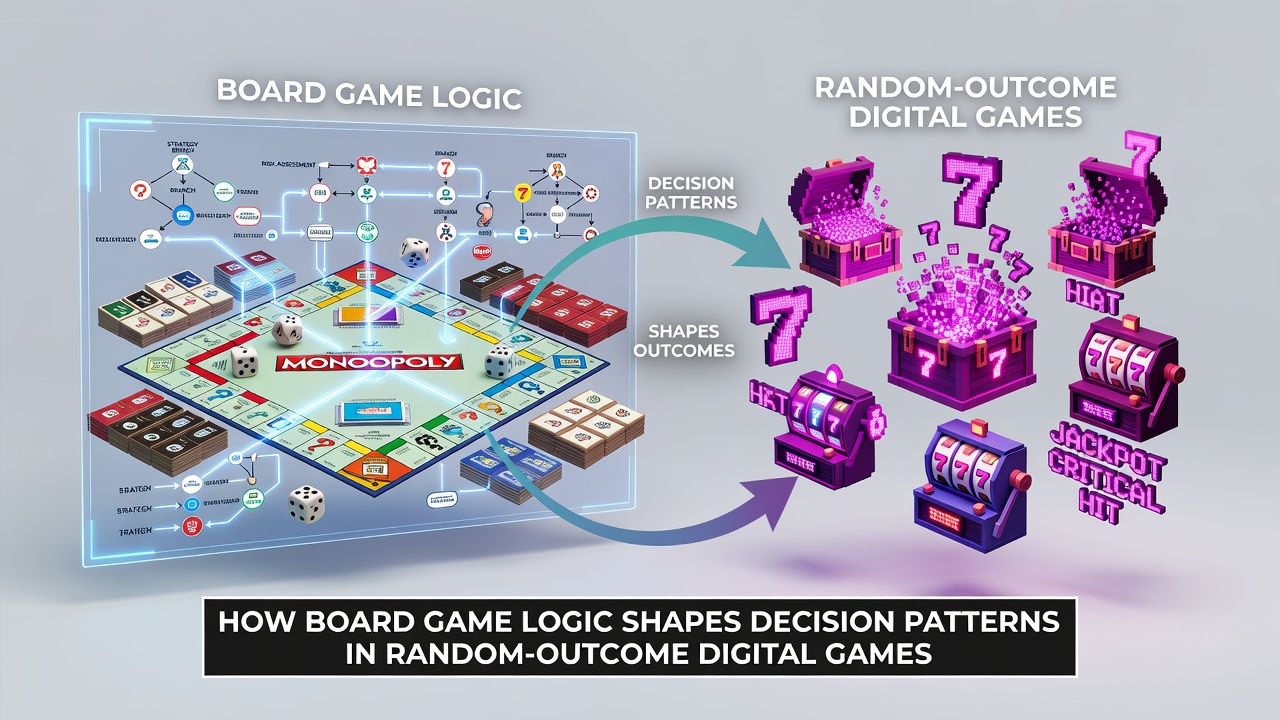
Board games have long trained players to weigh probabilities, manage resources, and anticipate opponents, while random-outcome digital games introduce elements of chance that test those same skills in new formats. Observers note that people who grew up with titles such as Risk or Settlers of Catan often carry forward habits of calculating odds and sequencing moves when they encounter digital environments where outcomes depend on algorithms rather than physical dice rolls. Researchers discovered that these habits create recognizable patterns, including deliberate pauses before committing resources and selective focus on visible variables that mirror board-game information displays.
Core Mechanics Shared Across Formats
Traditional board games rely on visible state information combined with hidden variables such as shuffled cards or dice results, and digital games replicate this structure through on-screen indicators and backend random number generators. Those who study player behavior find that individuals accustomed to board games tend to treat digital random generators as extensions of physical randomness, leading them to apply similar mental models for tracking sequences and adjusting strategies mid-session. Data from cognitive studies shows that players frequently import chunking techniques learned in chess or backgammon, grouping information into manageable units before making each choice in digital settings.
Probability Assessment Patterns
Board game enthusiasts regularly practice mental estimation of likelihoods during long sessions, and this practice transfers when digital interfaces present comparable uncertainty. Studies conducted at institutions including the University of Michigan indicate that participants with extensive board-game experience demonstrate faster recognition of expected-value concepts even when numerical feedback appears only after multiple rounds. Yet the same groups sometimes overlook adjustments required by digital systems that alter probabilities dynamically, a difference that becomes measurable in controlled experiments tracking decision latency and bet sizing.
Resource Management and Sequencing
Effective board-game play demands careful allocation of limited actions across multiple turns, and digital random games often reward parallel thinking. Observers have recorded that players apply turn-order logic from games such as Agricola or Puerto Rico when navigating digital reward ladders or loot tables. In June 2026, updated telemetry reports from several large gaming platforms revealed that users logging extended board-game hours before switching to random digital titles showed more consistent session lengths and fewer abrupt strategy changes compared with control groups lacking that background.
Cognitive Biases and Their Evolution
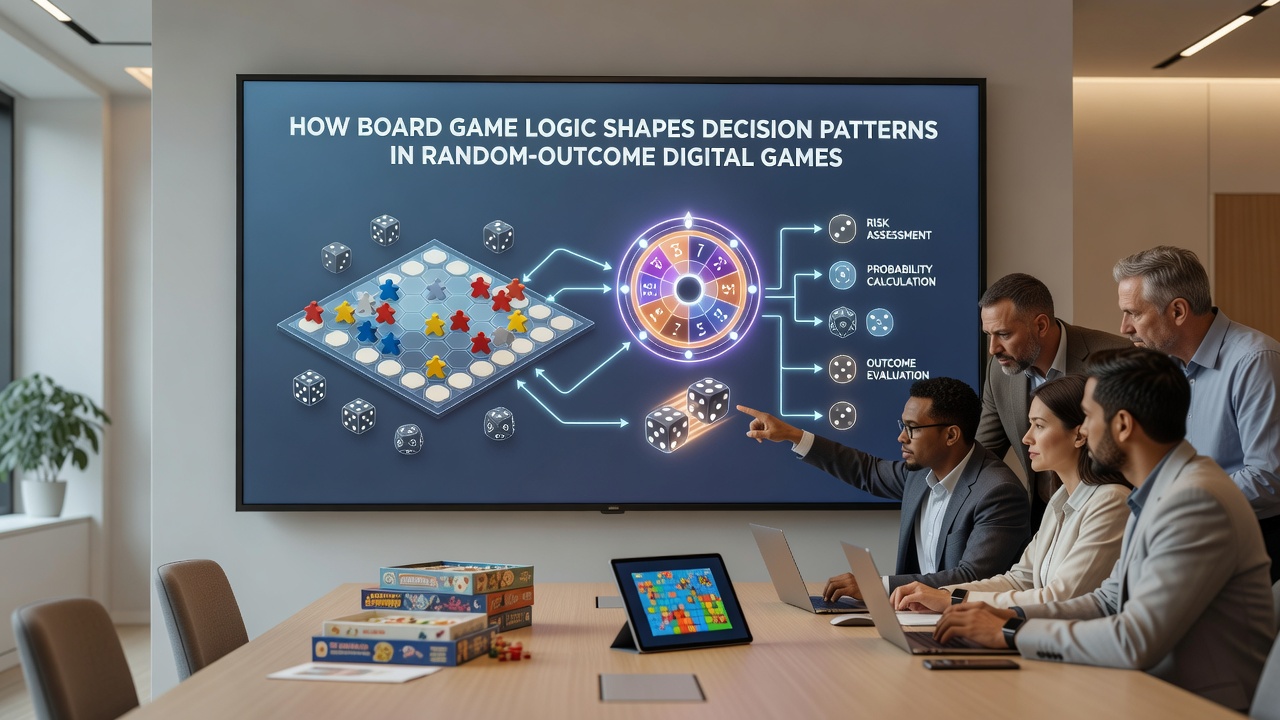
Board games can reinforce certain biases such as over-weighting recent outcomes or anchoring on early successes, patterns that persist when players move to digital formats. Research published by the Max Planck Institute for Human Development outlines how these biases manifest in digital environments through repeated selection of familiar mechanics even after underlying probabilities shift. Participants in longitudinal tracking studies adjusted more slowly when digital systems introduced new random distributions, suggesting that board-game training creates durable mental templates rather than flexible statistical reasoning.
Interface Design Implications
Developers have begun incorporating visual cues that echo physical board components, including token-style counters and turn-progress bars, to accommodate transferred decision patterns. Industry analyses from the Interactive Software Federation of Europe document rising adoption of these hybrid interfaces across mobile and desktop platforms since 2024. Such design choices allow players to leverage existing mental models while gradually introducing digital-specific variables like server-side seeding or dynamic difficulty scaling.
Conclusion
Board game logic continues to shape how individuals approach decision sequences in random-outcome digital games through shared emphasis on probability tracking, resource sequencing, and pattern recognition. Evidence from multiple academic and industry sources demonstrates measurable transfer effects alongside persistent biases that designers must account for when building new systems. As digital platforms evolve, the interplay between physical-game training and algorithmic randomness remains a central area of ongoing investigation.