3 Jul 2026
Examining Shared Risk Metrics in Traditional Board Games and Their Digital Counterparts
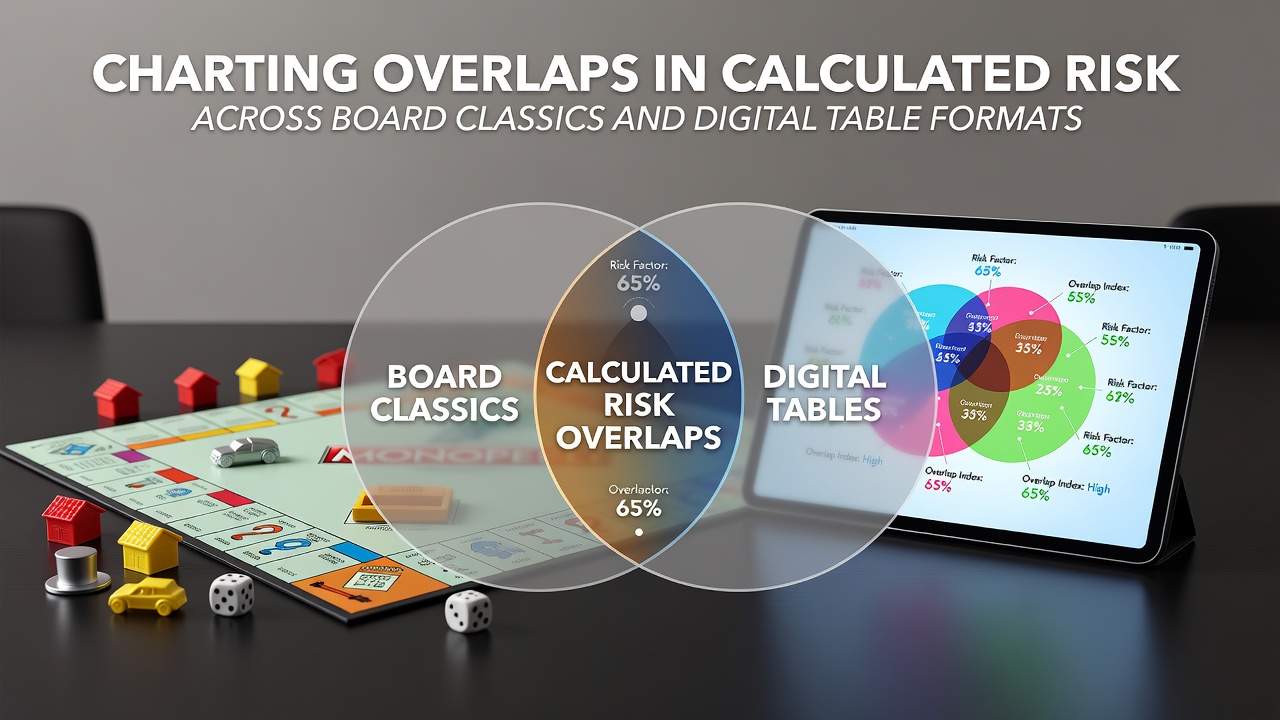
Board game classics such as chess, backgammon, and checkers have long required players to assess probabilities, weigh potential losses against gains, and adjust strategies based on opponent moves, while digital table formats replicate these elements through algorithms that simulate chance and skill interactions. Researchers have documented consistent patterns where calculated risk frameworks transfer across both physical and virtual environments, creating measurable overlaps in decision-making processes that data from cognitive studies continues to highlight.
Core Elements of Risk Calculation in Board Classics
Traditional formats demand precise evaluation of board positions, piece values, and sequences of play that carry inherent uncertainties, especially in games like backgammon where dice rolls introduce variables that players must integrate into long-term planning. Observers note that experts in these settings often employ probabilistic thinking, tracking multiple branches of possible outcomes simultaneously, and this approach builds foundational skills for managing calculated risks without relying on external aids. Studies from academic institutions show that repeated exposure to such mechanics strengthens pattern recognition, allowing participants to anticipate shifts in advantage with greater accuracy over time.
Checkers and similar classics further illustrate these dynamics through forced capture rules and king promotions that alter risk profiles mid-game, compelling continuous recalibration of defensive versus offensive postures. Data indicates that players who master these adjustments demonstrate improved performance in scenarios involving incomplete information, a trait that carries over when transitioning to other strategic pursuits. Those who've studied competitive records find that elite practitioners maintain detailed mental models of risk distribution, updating them in real time as the board evolves.
Adaptations in Digital Table Formats
Digital versions introduce interfaces that track probabilities automatically through software overlays, yet the underlying risk calculations remain rooted in the same principles that govern physical play. Algorithms in online platforms mirror dice outcomes and card shuffles from classics, presenting users with equivalent decision trees that reward careful analysis of odds and positional advantages. Evidence from industry reports reveals that participants often apply identical mental frameworks, adjusting for latency or interface cues while preserving core strategies developed in offline settings.
Multiplayer digital tables add layers through real-time opponent tracking and historical data logs, which enhance risk assessment by providing statistical baselines that physical boards cannot supply as readily. In July 2026, platform analytics from various regions showed sustained engagement with features that visualize potential move outcomes, suggesting that users value tools which externalize the calculated risk processes already familiar from board game traditions. This integration allows for quicker iterations on strategy without altering the fundamental overlaps in how risks are quantified and mitigated.
Documented Overlaps and Transferable Patterns
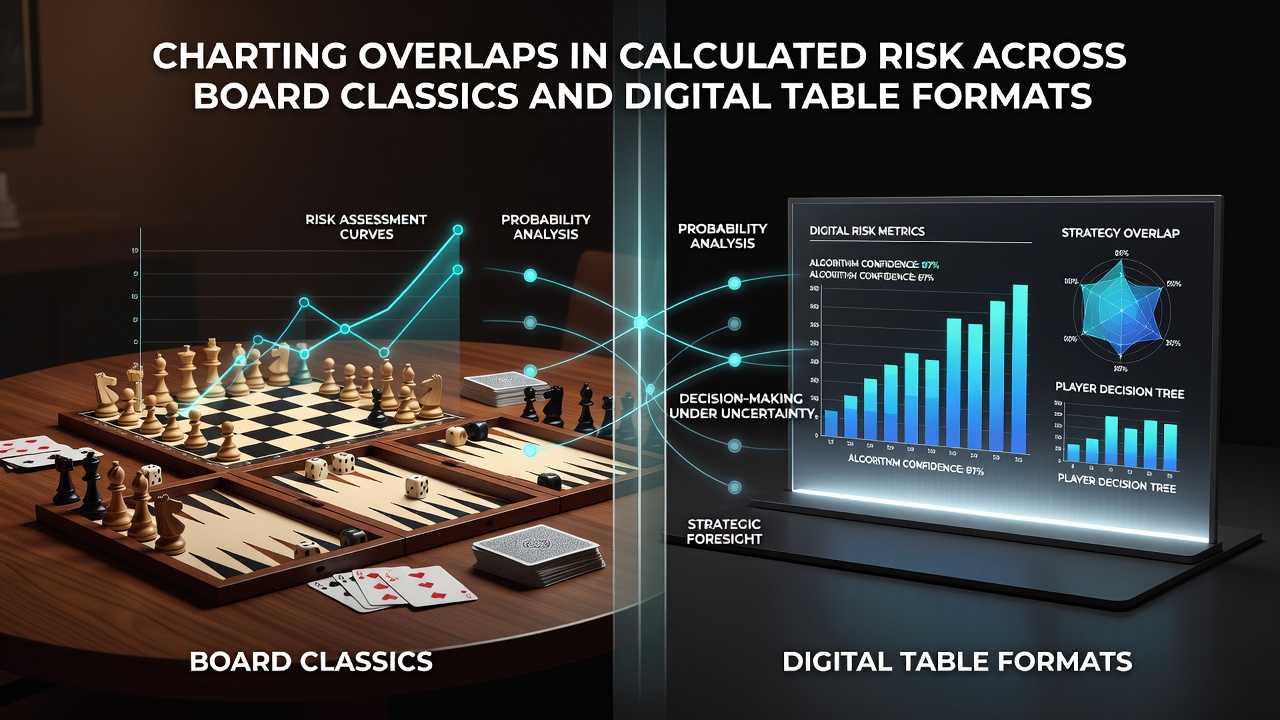
Comparative analyses conducted by research teams at institutions across North America and Europe demonstrate that skills honed in one format transfer effectively to the other, particularly in areas like expected value estimation and contingency planning. For instance, backgammon players accustomed to bearing off pieces under uncertainty apply similar sequencing logic when navigating digital interfaces that present randomized events through virtual dice. Figures from cognitive performance metrics indicate minimal degradation in accuracy when switching mediums, pointing to robust overlaps in the mental models employed.
What's notable is how digital formats sometimes amplify these overlaps by offering replay functions and probability simulators, which reinforce the same analytical habits cultivated through repeated physical matches. Australian research initiatives have tracked player cohorts and found that those with backgrounds in classic board games exhibit faster adaptation rates in digital environments, attributing this to pre-existing familiarity with risk layering and opponent modeling. Canadian university studies on strategic cognition further support these connections, showing neural activation patterns that remain consistent regardless of whether participants interact with wooden pieces or touchscreen representations.
Regional variations in platform design influence how these overlaps manifest, with some European systems emphasizing community-driven statistics that deepen risk awareness while North American variants focus on solo practice modes. Yet the core calculations stay aligned, as players continue to balance immediate threats against long-term positioning across both domains. Data from trade associations in the gaming sector reveals growing documentation of these parallels, aiding developers in creating experiences that build upon established player competencies rather than requiring entirely new approaches.
Conclusion
Overlaps in calculated risk across board classics and digital table formats stem from shared foundations in probabilistic reasoning, positional evaluation, and adaptive strategy that persist through format transitions. Research across multiple continents continues to map these connections, providing clearer pictures of how skills developed in one context enhance performance in the other. As digital tools evolve alongside traditional play, the documented patterns suggest sustained relevance for risk calculation frameworks that bridge physical and virtual table experiences.