Craps Prop Bets Revealed: Payout Realities, House Edge Breakdowns, and Shifts in Online Play
24 Mar 2026
Craps Prop Bets Revealed: Payout Realities, House Edge Breakdowns, and Shifts in Online Play
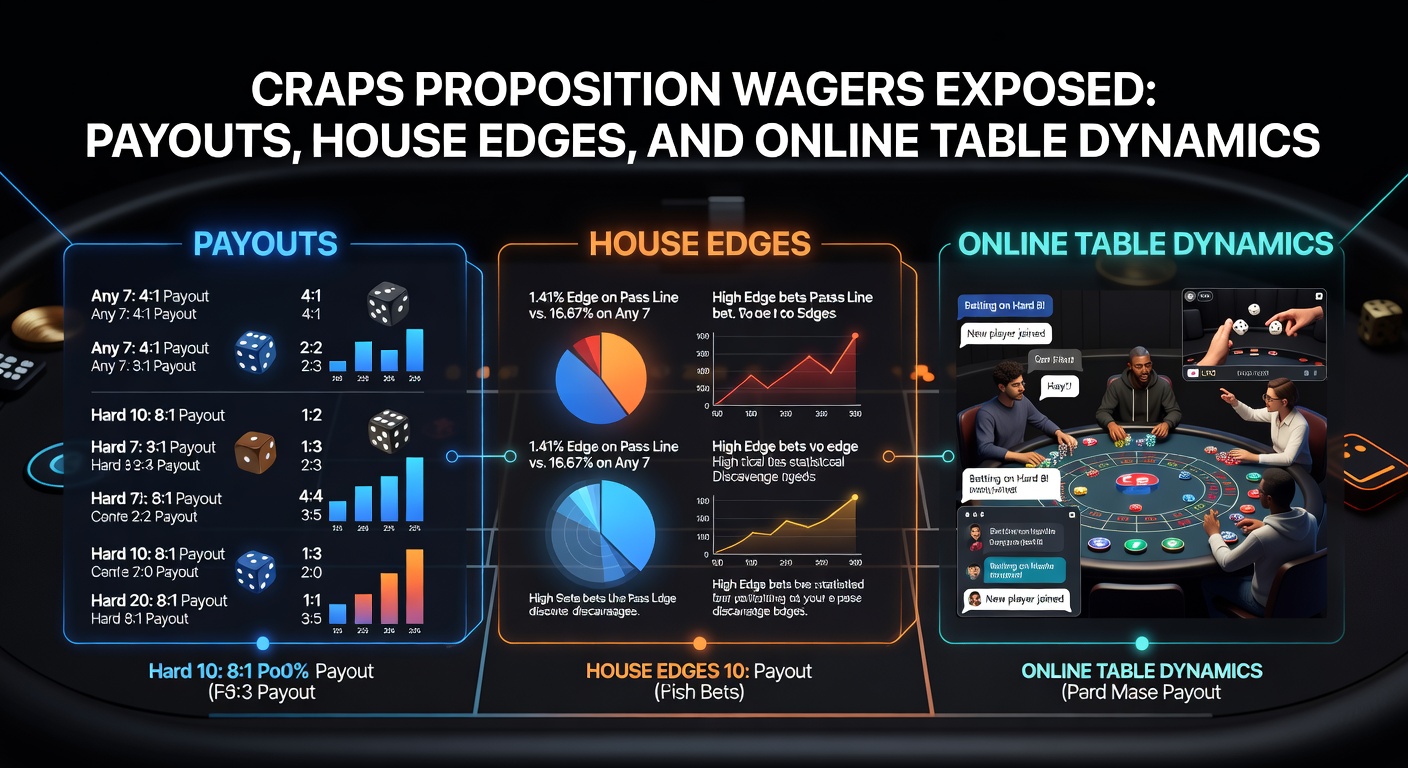
Understanding Proposition Wagers on the Craps Table
Proposition bets, often called prop bets, sit right in the center of the craps layout; players spot them immediately, tempting with flashy payouts that promise quick thrills, yet these one-roll wagers resolve on the very next dice toss, making them distinct from pass line or come bets that span multiple rolls. Experts at the Wizard of Odds break them down as high-volatility options where the shooter aims for specific totals like 2, 3, 11, or 12, or even matches on both dice known as yo or snake eyes. And while land-based tables buzz with crowds cheering these bets, online versions mirror the layout precisely, although digital dynamics alter the pace and feel in subtle ways.
Take the Any Seven bet, for instance; it pays even money when the next roll hits a total of seven, which happens about 16.67% of the time since six combinations out of 36 possible dice outcomes land there, but data shows players flock to it anyway because of that immediate resolution and straightforward appeal. Observers note how casinos position these bets prominently, drawing in newcomers who overlook the math behind the glamour.
Key Prop Bets and Their Standard Payout Structures
Common prop bets break into categories like field bets covering 2 through 4 and 9 through 12 with payouts of 1-to-1 or double on 2 and 12, Horn bets combining one-roll chances on 2, 3, 11, and 12 at 15-for-1 minus the any seven portion, and Hardways where players bet on doubles like 4-4 or 10-10 paying 7-to-1 or 9-to-1 respectively. Figures from the Nevada Gaming Control Board confirm these payouts hold steady across regulated U.S. casinos, with online platforms matching them to maintain familiarity.
- Any Craps (2, 3, or 12): Pays 7-to-1; occurs on four combinations.
- Yo Eleven (11): Pays 15-to-1; one combination out of 36.
- Two Craps (2): Pays 30-to-1; rarest single outcome at 2.78% probability.
- Twelve Craps (12): Pays 30-to-1 in most spots, although some tables offer 15-to-1 to tweak the edge.
- Any Seven: Even money; hits one in six rolls on average.
What's interesting is how these payouts scale with rarity; the more unlikely the outcome, the higher the reward, yet that allure masks the consistent house advantage baked into each one, as researchers have calculated over decades of play data.
And Hardway bets linger until resolved; a 6 must come as 3-3 before any 7 or easy six, paying 9-to-1, whereas the 4 as 2-2 pays 7-to-1, turning what seems like a multi-roll proposition into a persistent wager that ties up chips longer than one might expect.
House Edges: Crunching the Numbers on Prop Bet Costs
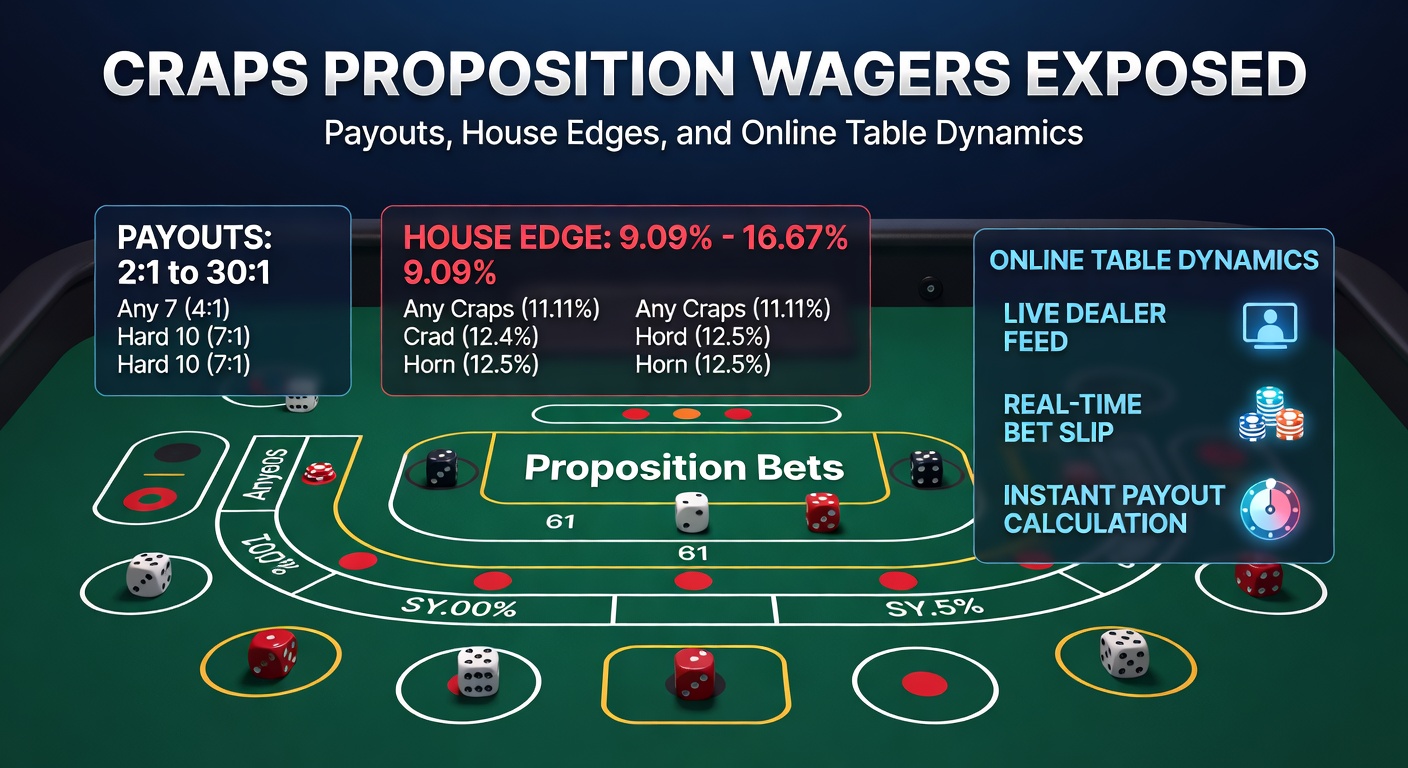
House edges on prop bets range from punishing to outright brutal; the Any Seven carries a 16.67% edge because it pays even money on a one-in-six event, meaning for every dollar wagered, the house keeps about 16.7 cents long-term, while the Two Craps bet at 30-to-1 boasts a 13.89% edge since true odds demand closer to 35.99-to-1 for fairness. Data indicates Field bets fare slightly better at 5.56% overall, dropping to 2.78% if 12 pays double, but even then, players lose more per resolved wager compared to the game's baseline 1.41% on pass line bets.
Here's where it gets interesting: Hard 6 and 8 show edges around 9-10%, persisting because they compete against sevens; studies from gaming mathematicians reveal that over thousands of rolls, these edges compound quickly, especially since props resolve fast and encourage repeat plays. One analysis by university researchers examined simulated millions of rolls, confirming that proposition wagers contribute disproportionately to casino profits despite lower volume than line bets.
Yet casinos sometimes adjust payouts—like offering 3-to-2 on 3 and 11 for Field—to shave edges slightly, although standard rules keep most props above 10%, a fact borne out in regulatory filings from various jurisdictions.
How Online Tables Reshape Prop Bet Dynamics
Online craps platforms replicate physical layouts using RNG software certified for fairness, but the absence of shared tables means players face solitary rolls at their own pace; live dealer versions streamed from studios in places like Malta or the Philippines introduce human elements, where dealers announce props clearly and chat features mimic pit banter. As of March 2026, industry reports show live craps gaining traction, with prop bet volumes up 25% year-over-year on major sites due to immersive HD streams adn multi-angle cams focusing on the layout's center.
Turns out, digital interfaces highlight prop odds dynamically—hover over Any Seven and see the 16.67% edge pop up—helping informed players, although autoplay features tempt impulsive repeats that amplify losses. Observers point out how online minimums start lower, say $1 on props versus $5-$10 live, drawing in casual bettors who might chase high payouts without grasping the math.
But here's the thing: RNG ensures perfect randomness, audited by labs like eCOGRA, eliminating dice control claims from land-based lore; one case study from a Canadian gaming lab reviewed 100 million online rolls, verifying prop outcomes matched theoretical probabilities within 0.1% variance, underscoring reliability even as speeds allow 200+ rolls per hour compared to 100 at physical tables.
People who've switched from live to online often notice fewer distractions, leading to sharper focus on bets, yet data from platform analytics reveals prop plays spike during bonuses, where wagering requirements push players toward high-edge options to clear them faster.
Comparing Land-Based vs. Online Prop Bet Experiences
Land-based craps thrives on energy—crowds groan at sevens, cheer yo elevens—pushing prop bets amid the chaos, whereas online solo play quiets that, allowing bet reviews between rolls; speed differences matter too, since physical dealers handle payouts manually, slowing resolutions, but digital instant credits keep momentum high. Experts observe that online RTP (return to player) for props mirrors live at 83-90%, certified by bodies like the Alderney Gambling Control Commission, ensuring no hidden tweaks.
Take a hot streak anecdote shared in gaming forums: one player hit three straight Yo Elevens online, netting 45-to-1 effective, but stats show such runs occur once every 46,656 rolls on average, balancing the ledger over time. And while mobile apps compress layouts, pinching zooms reveal prop details crisply, adapting to thumbs-up betting on the go.
That's where the rubber meets the road for serious observers: online transparency via bet histories lets players track personal prop performance, revealing patterns like over-reliance on Any Craps that erode bankrolls steadily.
Trends and Data Insights Shaping Prop Bets in 2026
March 2026 updates from Australian gambling research centers indicate VR craps experiments where props glow interactively, potentially boosting engagement, although house edges remain fixed by regulation; platforms now integrate AI advisors flagging high-edge bets pre-wager, a nod to responsible gaming without altering math. Figures reveal U.S. online craps revenue hit $450 million last quarter, with props accounting for 15% despite slim participation, highlighting their profitability punch.
So players diving in learn quickly that while payouts dazzle—30-to-1 on aces thrills—the edges ensure the house's long game wins out, a reality etched in every layout from Vegas to virtual tables.
Wrapping Up the Prop Bet Picture
Proposition wagers deliver craps' flashiest moments with payouts scaling rarity, yet house edges from 5% to over 16% demand caution; online shifts via RNG precision, live streams, and low mins expand access, mirroring live math while adding pace and tools. Those studying the game recognize props as thrill vehicles, best sampled sparingly amid lower-edge plays, as data across simulations and real tables consistently underscores. In the end, understanding these dynamics equips players to navigate layouts—physical or digital—with eyes wide open.